
Diagnose
A full crawl and rendered DOM audit across seven dimensions, plus a Lighthouse and answer engine baseline on every page and post.
AVRO Academy is an independent high school in midtown Toronto. They hired me to make their Wix site more visible in Google and the AI answer engines. My first look suggested a light optimization pass. My detailed review found three limits baked into the platform that no amount of tuning could lift. So I rebuilt the site on WordPress instead.
Every figure below is measured, in Lighthouse, Google Search Console and GA4.
REBUILD SHIPPED . LIVE ON AVRO ACADEMY . JUL 2026
Bar length is load time, so shorter is faster.
Home was already quick and stayed the same, so nothing here is cherry picked.
Crawling was clean, HTTPS was valid, and the SEO score was already a perfect 100. Three things held it back that could not be fixed from inside Wix. That is what turned a tune up into a rebuild.
Wix shipped up to 1.66 seconds of unused JavaScript on every view, before a word of content rendered. That capped mobile performance at 58 and best practices at 54, and no setting could change it.
The visual headings were generic boxes, not H1s, so six of seven pages had nothing for a search engine to anchor on. Rewriting the copy would not have created one.
No School schema, no machine readable FAQ, no answer first passages. The site was effectively invisible to ChatGPT, Perplexity and Google AI Overviews.
What patching would have bought. Faster images and better copy on a site that still could not be read, still could not be quoted, and still shipped a heavy runtime on every view. Inches, at real cost. I recommended the rebuild instead, and priced it as a fixed fee hygiene month.
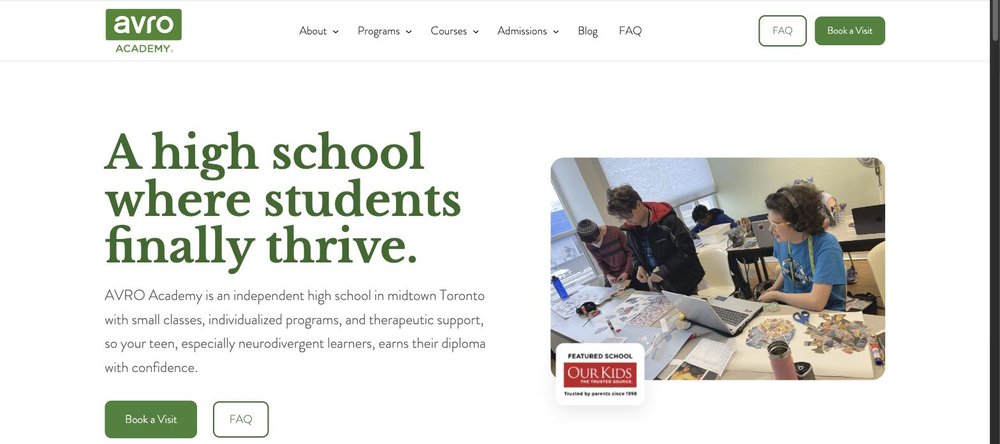
The old homepage opened with a logo and two buttons floating in whitespace, and no real headline for Google to read. The rebuilt one leads with a true H1, a clear description, and the reasons a parent should book a visit.
| Score | Wix, before | WordPress, after |
|---|---|---|
| Performance | 58 | 97 |
| Best practices | 54 | 99 |
| Accessibility | 90 | 100 |
| Answer engine readiness | 52 | 68 |
Scored 0 to 100 by Google Lighthouse. The SEO score was already 100 on Wix and stayed there, so it is not shown. Answer engine readiness is my own extraction audit, how cleanly ChatGPT, Perplexity and Google AI Overviews can quote the page.
Wix rendered visual headings as generic boxes, so most pages had no real H1 for a search engine to anchor on. There was no School schema, no machine readable FAQ, and one page told Google to register for a school whose own name was misspelled. The rebuild fixed all of it.
| Findability | Before | After |
|---|---|---|
| Pages with a real H1 | 1 of 7 | 7 of 7 |
| Pages with schema | 2 of 7 | 7 of 7 |
| Unique blog meta descriptions | 8 of 18 | 18 of 18 |
| Misspelled school name in search | ACRO | Fixed |
H1 and schema counts across the 7 core pages. Meta descriptions across the 18 blog posts. Source: rendered DOM crawl, Jul 8 and Jul 9, 2026.
The index had grown into a thicket. The homepage lived at two live URLs that each claimed to be canonical, so they split their own link equity. Three courses pages, three registration pages, and abandoned leftovers like a 2022 Fees page and a Courses1 shell were all still indexable. When several pages target the same query, Google has to choose, the equity splits, and none of them ranks as well as one strong page would. I consolidated the duplicates, retired the ghosts, and gave each intent a single home.
Homepage URLs competing for the same rankings.
Ghost pages like the 2022 Fees page and a Courses1 shell, pulled out of Google's index.
Every post carried over, rebuilt on the fast template, with a unique meta description and its own closing links. Five posts had been slower than ten seconds. None are now.
| The blog | Before | After |
|---|---|---|
| Mobile performance | 47 | 99 |
| Median load time | 7.4s | 1.6s |
| Posts slower than 4 seconds | 18 | 0 |
A full crawl and rendered DOM audit across seven dimensions, plus a Lighthouse and answer engine baseline on every page and post.
Weigh a light optimization pass against a rebuild, honestly. Here the platform ceiling made the rebuild the cheaper path to a real result.
A custom WordPress theme matched to the brand, with real headings, School and FAQ schema, and a fast template for every page and post.
Consolidate the duplicate and ghost pages, map 52 old URLs to 301 redirects, and carry all 18 posts across with their real dates and fresh metadata.
Capture the before and after in the same tools, and track organic performance in Search Console and GA4 against the captured baseline.
The new site went live and became indexable on Jul 9, 2026. Every number on this page is a measured before and after of the site itself: speed, structure, and readiness. Organic performance is tracked in Search Console and GA4 against the Wix baseline captured before cutover: 693 clicks and 17,400 impressions over the prior 90 days.
Because three limits were baked into the platform: a heavy runtime I could not slim, visual headings that were not real H1s, and no way to add the structured data that AI answer engines read. Optimizing would have improved images and copy while leaving those ceilings in place, so a rebuild was the cheaper path to a real result.
The slowest page, a blog post, went from 13.6 seconds to 1.7 seconds on mobile, roughly eight times faster. Average mobile performance across the seven core pages rose from 58 to 97, and every blog post that had been slower than four seconds is now under two. All figures are from Google Lighthouse.
This was a fixed fee hygiene month: a diagnostic, the rebuild, the migration, and the measurement, at an agreed price rather than an open ended retainer. I work in accessible hourly and fixed fee arrangements so the scope fits a small or mid sized business, not the other way around.
Every engagement opens with a diagnostic on a short call: the technical blockers capping your visibility, each with its fix, and an honest read on whether your platform can be tuned or needs rebuilding. Accessible hourly and fixed fee arrangements, so the scope fits the business.
The deliverable. A diagnostic report: the blockers capping your visibility ranked by impact, each with a fix, the answer engine gaps keeping you out of AI results, and a clear recommendation on optimize versus rebuild with the cost of each.
Yours to execute, with me, or on your own.
The most useful hour in this process is the first one, and it happens before any money moves.